Why homework distractions are so powerful
Homework usually happens after school, when energy is already lower. You may be tired, hungry, bored or thinking about friends, games and messages. At the same time, homework often has no immediate reward. A phone notification gives quick stimulation, while a worksheet gives effort. The brain naturally moves toward the easier reward unless the environment is designed to protect focus.
This does not mean you are lazy. It means homework is competing against tools and habits that are built to capture attention. The solution is not to shame yourself into focus. The solution is to make distraction harder and starting easier. A good homework routine removes decisions, reduces temptation and gives each task a clear finish line.
Start with a homework reset
Before starting, take three minutes to reset. Put water nearby, clear the immediate desk area, open the assignment, close unrelated tabs and write down what needs to be done. This short reset matters because a messy start creates a messy session. If you begin with five tabs open and no plan, your attention will scatter quickly.
The reset should not become procrastination. Do not clean your whole room, redesign your planner or spend twenty minutes choosing music. The goal is simply to create a small working zone. A clear enough space is better than a perfect space that takes forever to prepare.
Write one task, not a giant list
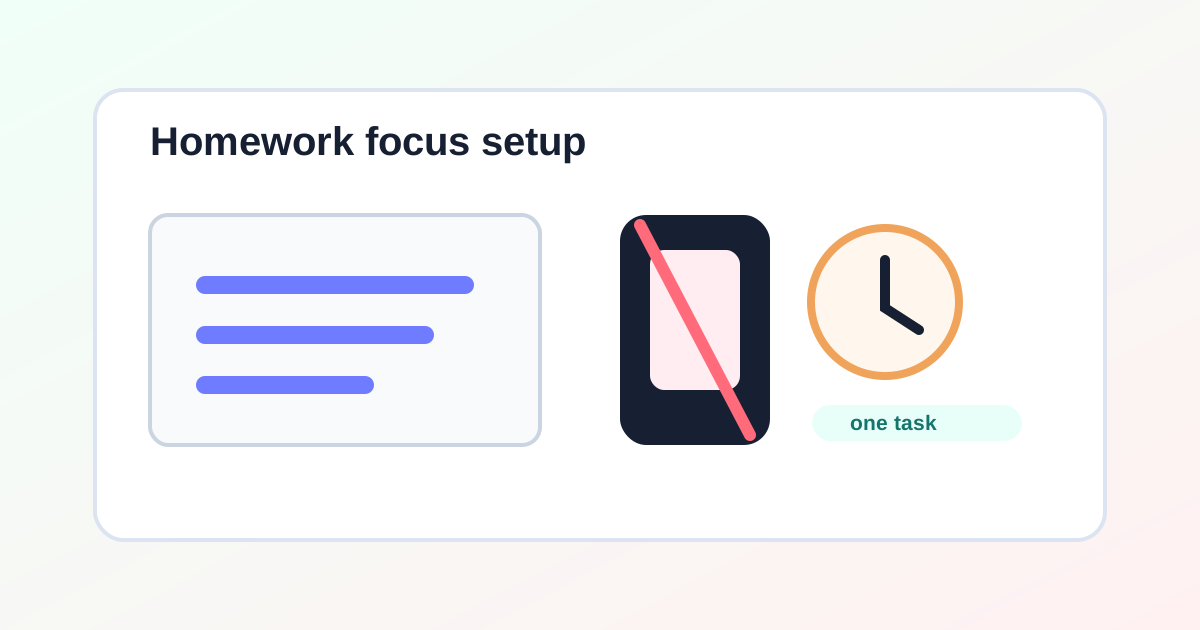
A long homework list can make students freeze. If you look at six assignments at once, the brain may avoid all of them. Instead, choose one task for the next focus block. Write it clearly: "finish questions 1-8," "outline history paragraph," "complete Spanish vocabulary cards" or "solve five algebra problems." A clear task is easier to start than a vague subject.
You can keep a full list somewhere else, but your desk should show the current task. One task reduces mental noise. It also gives you a finish line. When the task is complete, you get a real sense of progress, which makes the next block easier.
Move your phone before you begin
The phone is often the biggest homework distraction because it creates both external and internal interruptions. A notification is external. The thought "maybe someone texted" is internal. Even if the phone is silent, having it nearby can pull attention. The strongest method is physical distance. Put it across the room, in another room or inside a bag.
If you need your phone for homework, use focus mode and open only the required tool. Turn off notifications. Do not keep social apps one tap away. If possible, use a laptop or printed materials instead. You are not trying to prove willpower. You are designing the session so willpower is needed less often.
Use a short timer
A timer makes homework feel finite. Instead of telling yourself you must work all evening, set a twenty-five-minute block. During that block, work only on the chosen task. When the timer ends, take a planned break. The Pomodoro Timer is useful because it gives a clean beginning and ending.
For difficult or boring homework, start with ten minutes. Ten focused minutes are better than thirty distracted minutes. Once you begin, you may continue. Starting is often the hardest part. A short timer lowers the emotional cost of starting.
Use the two-minute rule for procrastination
If you cannot start, make the first action tiny. Open the document. Write the title. Copy the first question. Read the instructions. Solve the first line. Promise yourself you only need two minutes. After two minutes, you can decide whether to continue. Most of the time, movement reduces resistance.
The two-minute rule works because procrastination often grows from the size of the task. Once the task is open and the first step is done, it feels less unknown. You are no longer facing "homework." You are facing the next small action.
Keep a distraction list
Distractions are not only notifications. They are also thoughts. You may remember a chore, a message, another assignment or a random idea. Instead of following each thought, write it on a distraction list. Then return to the task. This tells your brain the idea is saved, so it does not need to repeat itself.
During your break, check the list. Some items will matter. Others will look unimportant. The point is that you did not interrupt the homework block every time your brain offered a new direction. A distraction list is simple, but it can save a surprising amount of time.
Make homework active
Some homework is boring because students approach it passively. If you are reading, turn headings into questions. If you are solving problems, cover examples before trying. If you are writing, make a quick outline before drafting. Active work keeps the brain involved. Passive work invites wandering.
Use the AI Tutor when you are stuck, but use it for hints and explanations, not shortcuts. Ask, "Can you explain this step?" or "Give me a similar example." Then finish the answer yourself. Homework is easier to complete when confusion is removed early.
Break large assignments into checkpoints
Large assignments create distraction because they feel endless. Break them into checkpoints. For an essay, checkpoints might be choose topic, write thesis, find evidence, outline paragraphs, draft introduction, draft body paragraph and revise. For a worksheet, checkpoints might be questions 1-5, 6-10 and correction. For a project, checkpoints might be research, notes, slides and practice.
Each checkpoint should be small enough to finish in one block. This creates progress and prevents the common problem of working for an hour while feeling like nothing is done. Checkpoints turn a big task into visible steps.
Use breaks without losing the session
Breaks help focus, but only if they do not become escape tunnels. A good break restores attention and makes returning possible. Stand up, stretch, drink water, use the bathroom or walk for a few minutes. Avoid opening apps that are designed to keep you scrolling. A five-minute break can easily become thirty minutes if the break has no boundary.
Set a break timer. Keep the next task visible before leaving the desk. When the break ends, return to the written task. The goal is not to remove all fun from breaks. The goal is to avoid breaks that make homework harder to restart.
Match homework to energy levels
After school, energy changes. Some students focus best immediately after a snack and short rest. Others need to finish homework before relaxing because once they relax, restarting is hard. Notice your pattern. If late evening always fails, do not build a routine that depends on late evening discipline.
Do hard homework when your energy is highest. Save easier tasks, organizing or flashcards for lower-energy times. If everything feels hard, start with the assignment that causes the most stress. Removing the biggest stressor can make the rest of the evening calmer.
Use a homework order strategy
There are three useful homework orders. The first is hardest first, which works when you still have energy. The second is easiest first, which works when you need momentum. The third is deadline first, which works when time is tight. Choose intentionally instead of randomly.
If you always start with easy tasks, hard assignments may be pushed too late. If you always start with hard tasks, you may avoid starting at all. A balanced method is to do one quick task for momentum, then the hardest important task, then smaller tasks. Test what works for you.
Prepare for repeated distractions
If the same distraction happens every day, plan for it. If family noise interrupts you, try headphones or a different time. If messages distract you, tell friends you will reply after a block. If hunger distracts you, eat before starting. If confusion distracts you, ask for help earlier. Repeated problems need systems, not daily frustration.
Do not wait until you are already distracted to solve the distraction. Make the decision before the session. A routine is powerful because it handles predictable problems automatically.
What to do when homework feels impossible
Sometimes homework feels impossible because the task is unclear. Read the instructions and underline the action words. Are you supposed to explain, compare, calculate, summarize or analyze? If you still do not understand, ask for help. Use the AI Tutor for a simpler explanation, email a teacher if appropriate or ask a classmate what the assignment is asking.
If the problem is emotion rather than confusion, lower the bar. Work for five minutes. Complete one question. Write a messy first sentence. Progress often changes mood. Waiting to feel ready can keep you stuck. Action creates readiness.
Finish with a closing routine
At the end of homework, do a two-minute closing routine. Check what is finished, submit anything that must be submitted, pack materials, write unfinished tasks and choose the first task for tomorrow. This prevents the next day from starting in confusion.
A closing routine also gives your brain permission to stop thinking about homework. Unfinished tasks create mental noise when they are not captured. Writing them down makes them easier to handle later.
Common homework focus mistakes
The first mistake is keeping the phone beside you. The second is starting without a specific task. The third is trying to finish everything in one giant session. The fourth is taking unplanned social media breaks. The fifth is refusing to ask for help when stuck. The sixth is working while hungry, exhausted or surrounded by clutter.
Fix one mistake at a time. Put the phone away today. Use a timer tomorrow. Make a distraction list the next day. Small improvements can make homework much less painful.
FAQ
Why do I get distracted every time I do homework?
You may be starting tired, keeping your phone nearby, using vague tasks or facing assignments you do not understand. Fix the setup before blaming yourself.
How long should a homework focus block be?
Twenty-five minutes works well for many students. If the task feels too hard, start with ten minutes. Short focused blocks beat long distracted sessions.
Should I listen to music while doing homework?
It depends on the task. Instrumental music can help some students, but lyrics may hurt reading and writing. Test what helps you complete more accurately.
How do I stop procrastinating homework?
Use the two-minute rule, choose one clear task, set a timer and remove the phone before starting. Make the first step small enough that you can begin even without motivation.