Why students forget what they study
Many students forget because they confuse recognition with memory. When you reread a page, the information looks familiar. Familiarity feels like learning, but it is weaker than recall. You may recognize a definition while the notebook is open, then fail to produce it during a test. The difference is important. Recognition says, "I have seen this before." Recall says, "I can bring this back without help." Exams usually require recall, application or explanation.
Forgetting is also natural. The brain does not keep every detail forever after one exposure. If information is not used again, it fades. This is not a sign that you are bad at studying. It means the study method needs repeated retrieval. The best memory systems make information return several times before the exam, with enough effort that the brain learns it matters.
Stop rereading as your main method
Rereading can be useful at the beginning, especially when material is new. The mistake is using it as the main study method. Reading the same notes three times may increase comfort, but it often does not prove you can answer questions. Students who rely on rereading are surprised when they blank during an exam because they never practiced pulling the information out.
After one careful read, switch to active recall. Close the notes and ask: what were the main ideas, what are the key terms, what examples explain them, and what questions could appear on a test? If you cannot answer, return to the notes briefly, then try again. This cycle builds stronger memory than passive review.
Use active recall every study session
Active recall means trying to remember before looking. It can be uncomfortable because it reveals gaps, but that discomfort is the point. Each attempt tells the brain to strengthen the pathway. Active recall can be simple: cover the page and explain the topic, write everything you remember, answer flashcards, solve a problem, label a blank diagram or create a mini quiz.
Use active recall early, not only the night before the exam. After class, write three questions from the lesson and answer them. The next day, answer again without notes. Before the test, mix questions from different topics. The more often you retrieve information, the more available it becomes.
Make flashcards that test one idea
Flashcards are powerful when they are specific. A weak card asks something too broad, like "Photosynthesis." A better card asks, "What are the inputs and outputs of photosynthesis?" or "Where does photosynthesis happen in plant cells?" One card should test one idea. This makes answers clearer and helps you know what you actually remember.
Use the Flashcard Maker for terms, formulas, dates, processes and examples. For each card, write a question on one side and a short answer on the other. Add examples when possible. A definition without an example is easier to forget. A definition linked to a real situation becomes more memorable.
Use spaced repetition instead of last-minute review
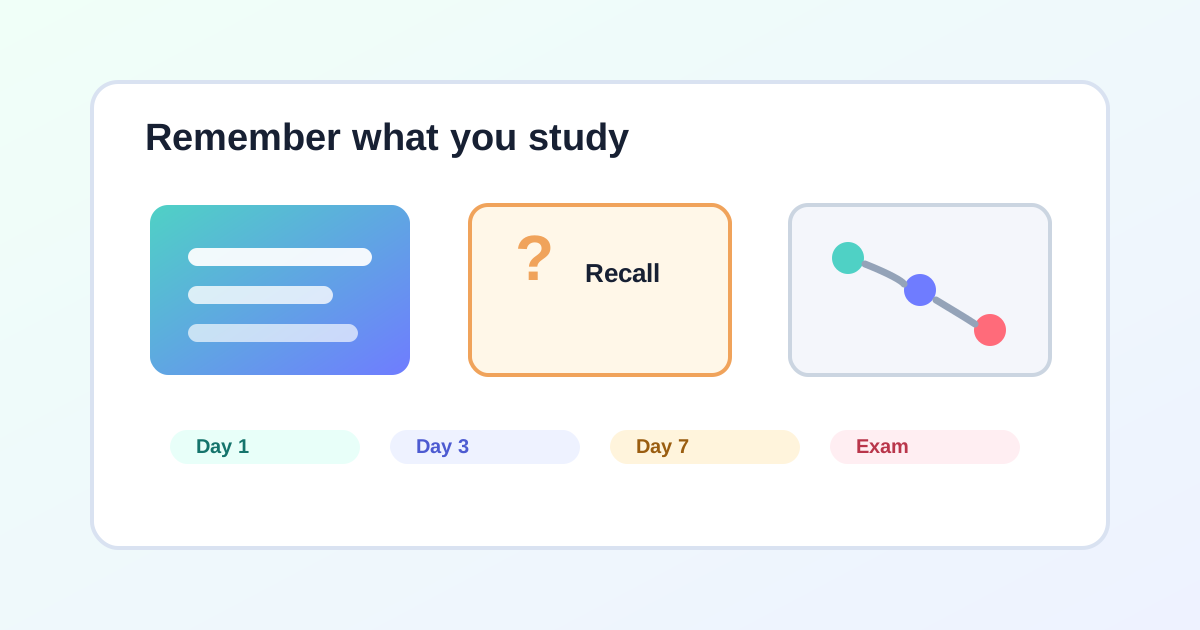
Spaced repetition means reviewing information with gaps between sessions. A simple schedule is day one, day three, day seven and before the exam. The exact timing does not need to be perfect. The goal is to revisit material before it disappears completely. Each review should include recall, not just reading.
For example, if you learn a history timeline on Monday, test yourself on Tuesday. On Thursday, write the timeline from memory. The next week, answer cause and effect questions. Before the exam, connect the timeline to essay prompts. This repeated contact is much stronger than reading the whole chapter once at the end.
Connect new information to what you already know
Memory improves when ideas connect. Isolated facts are fragile. Connected facts have more paths back to them. When you learn something new, ask: what does this remind me of, what is it similar to, what is it different from, and where would I use it? These questions turn information into a network.
If you study biology, connect a process to a diagram, a real body function and a practice question. If you study history, connect a date to causes, consequences and people. If you study math, connect a formula to the type of problem it solves. Connections make recall easier because there are multiple ways to reach the idea.
Use examples, not only definitions
Definitions are important, but examples make them stick. A student may memorize the definition of "scarcity" and forget it later. If the student connects scarcity to limited study time before exams, the idea becomes easier to remember. Examples make abstract concepts concrete.
For every important term, write one school example and one real-life example. For every formula, write one solved problem. For every essay point, write one piece of evidence. Examples give your brain hooks. They also prepare you for exams that ask for application, not only recall.
Teach the topic in simple language
If you can teach a topic simply, you probably understand it. Choose a topic and explain it as if teaching a younger student. Use plain words. Avoid hiding behind textbook language. When you get stuck, you have found a weak spot. Return to the notes, repair the explanation and try again.
You can teach out loud, write a short explanation or use the AI Tutor to ask follow-up questions. The goal is not to sound impressive. The goal is to make the idea clear enough that you can rebuild it during an exam. Teaching forces organization, and organized information is easier to remember.
Turn notes into questions
Notes are easier to remember when they become questions. A heading like "Causes of the French Revolution" becomes "What were the main causes of the French Revolution?" A formula section becomes "When should I use this formula?" A science diagram becomes "Can I label this from memory?" Questions create a reason to retrieve.
Use the AI Notes Tool to turn rough notes into summaries and quiz questions. Then edit the questions so they match your teacher, textbook and exam style. Do not only collect questions. Answer them without notes and mark the ones you miss. Missed questions become your next review plan.
Practice mixed recall
Students often review topics in the same order they learned them. That can create a false sense of memory. If the chapter always moves from section one to section two, your brain may rely on order rather than understanding. Exams usually mix topics. Mixed recall prepares you for that.
After you learn separate topics, combine them. Mix vocabulary cards from different chapters. Solve math problems in random order. Answer history questions that compare different time periods. Mixed practice is harder, but it improves flexible memory. If you can remember information when the order changes, you know it more deeply.
Use a mistake log to remember corrections
Mistakes are valuable if you use them. After a quiz or practice session, write each mistake, the reason and the correction. The reason might be forgotten definition, wrong formula, confused terms, missing example, careless reading or weak explanation. This turns mistakes into a memory map.
Review the mistake log before the next test. Many students repeat the same errors because they never study the correction. A mistake log makes the correction visible. It also saves time because you focus on what actually caused lost marks instead of reviewing everything equally.
Study before sleep, but do not sacrifice sleep
Sleep helps memory. Reviewing a small amount before bed can be useful because the brain continues processing information during sleep. But staying up late to study more can backfire. If you cut sleep, attention and recall often suffer the next day. A tired brain may remember less even after more hours at the desk.
A better approach is a short evening review: answer flashcards, check a summary, rewrite a formula from memory or explain one topic. Then sleep. The next day, test yourself again. Memory grows through review plus recovery, not review plus exhaustion.
Use retrieval practice for reading
If you forget what you read, do not only slow down. Add retrieval. After each section, close the book and write the main idea in one sentence. Then write two details and one question. This forces your brain to process meaning instead of letting your eyes move across the page.
For textbook chapters, preview headings first. Turn each heading into a question. Read the section to answer the question. Then close the book and answer from memory. This method is slower than skimming, but it saves time later because the material becomes easier to review.
Use diagrams and memory maps
Visual memory can support verbal memory. If a topic has parts, steps, causes, categories or comparisons, draw it. A diagram does not need to be beautiful. It needs to show relationships. For science, draw processes. For history, draw timelines. For literature, draw character relationships. For economics, draw cause and effect chains.
After drawing with notes, draw again without notes. Then compare. The missing labels show what to review. Diagrams work especially well because they make structure visible. Structure helps memory because you are not trying to remember a pile of separate details.
Create a weekly review routine
Remembering requires maintenance. Once a week, review the most important topics from each subject. This does not need to take hours. Choose the topics most likely to return on tests or finals. Answer questions, review flashcards and check old mistakes. Use the Study Schedule Planner to place review blocks before work piles up.
A weekly review prevents the common problem of relearning everything before exams. When information is touched regularly, exam preparation becomes faster. You are not starting from zero. You are strengthening what already exists.
Make memory emotional but not stressful
The brain remembers information better when it feels meaningful. You can add meaning by connecting topics to goals, stories, examples, problems or curiosity. Stress can create urgency, but too much stress hurts recall. The aim is interest and purpose, not panic.
Ask why the topic matters. Ask how it appears in real life. Ask what problem it solves. Even a boring topic becomes easier to remember when it has a reason. If you cannot find a reason, connect it to a concrete goal: passing a test, improving a grade or understanding a future class.
What to do if you forget during an exam
If you blank during an exam, pause and use cues. Write related terms, formulas, examples or diagrams in the margin. Start with what you know. Sometimes one remembered piece brings back the rest. Do not stare at the same question for too long. Move on and return later with a calmer mind.
After the exam, do not only feel bad about forgetting. Ask what kind of forgetting happened. Did you never learn the term? Did you recognize it but fail to recall it? Did you know it at home but panic during the test? Each cause has a different fix. Better review comes from better diagnosis.
A simple memory routine you can use today
Choose one topic. Read or review it once. Close the notes and write what you remember. Check the notes and correct gaps. Make five flashcards. Answer them tomorrow. Three days later, answer them again mixed with other topics. One week later, use the topic in practice questions. Before the exam, review mistakes and teach the idea out loud.
This routine works because it includes the core memory principles: recall, spacing, correction, examples and application. It is not complicated, but it must be repeated. Memory is not built by one perfect session. It is built by returning at the right times.
Common mistakes that make students forget
The first mistake is rereading without testing. The second is making flashcards that are too broad. The third is reviewing only the night before. The fourth is ignoring mistakes. The fifth is studying while exhausted. The sixth is memorizing definitions without examples. The seventh is never checking if you can explain the topic in your own words.
Fixing these mistakes can change results quickly. You do not need a perfect memory. You need a better system. Start with active recall and spaced review. Those two habits alone can make studying feel more reliable.
FAQ
Why do I forget everything after studying?
You may be relying on recognition instead of recall. Rereading makes notes feel familiar, but testing yourself without notes builds stronger memory.
How many times should I review something to remember it?
Most students need several reviews. A simple pattern is the same day, a few days later, one week later and again before the exam. Use active recall each time.
Are flashcards good for remembering what you study?
Yes, if each card tests one clear idea and you answer before looking. Flashcards are especially useful for terms, formulas, dates, steps and examples.
How do I remember long chapters?
Break the chapter into sections, turn headings into questions, summarize each section from memory and review the questions over several days.