Why the night before matters
The night before an exam can either calm your brain or overload it. Many students panic and try to study everything. They open every notebook, reread every chapter and stay awake far too late. This feels responsible because it is intense, but it often creates exhaustion, confusion and stress. A tired brain may remember less even after more hours at the desk.
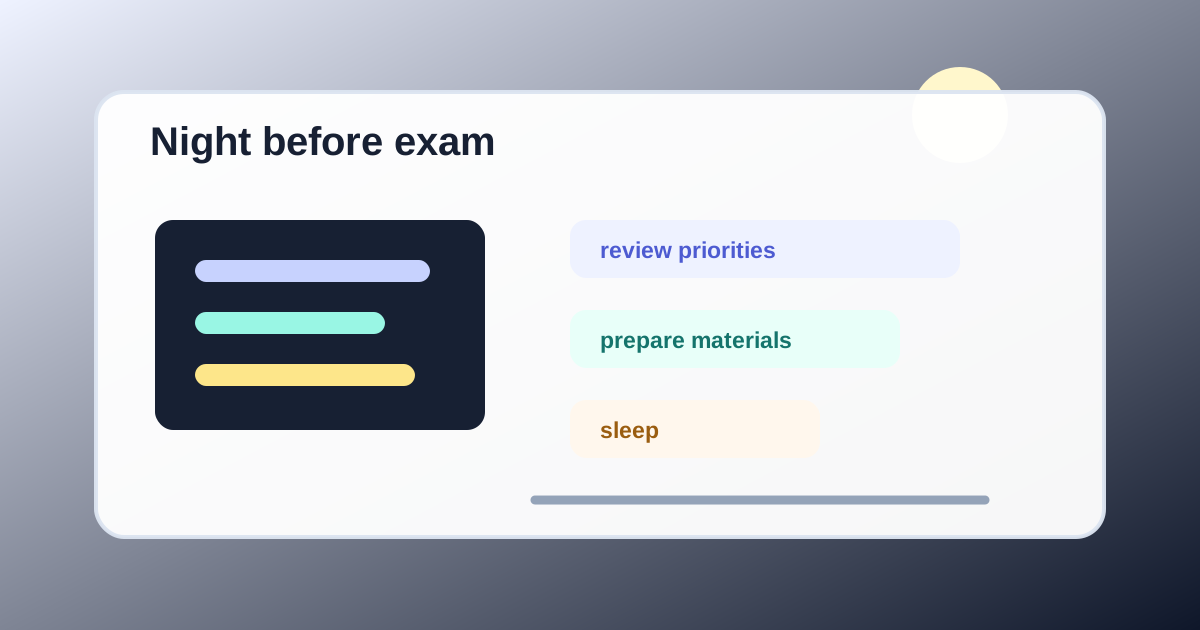
A better night-before plan is selective. You are not trying to become perfect. You are trying to make the most important information easier to access tomorrow. That means reviewing priorities, practicing lightly, preparing materials and sleeping. The goal is to arrive at the exam with a clear mind, not a destroyed one.
First, stop and make a priority list
Before studying, write a short priority list. Include the topics most likely to appear, the formulas or terms you must know, the mistakes you keep making and any teacher hints. Do not make a huge list of everything in the course. A giant list creates panic. A short list creates direction.
Use three categories: must review, should review and only if there is time. Must review topics are high-value and still weak. Should review topics are important but partly understood. Only-if-time topics are low-value details. Start with must review. If you begin with random easy material, you may waste the final useful hours.
Use active recall, not passive rereading
Passive rereading feels safe at night because it is low effort. The problem is that it may not show whether you can remember the information tomorrow. Active recall is better. Close the notes and answer questions. Write formulas from memory. Explain a process out loud. Cover a diagram and label it. Create a quick essay plan without looking.
You do not need a brutal practice session. The night before should be lighter than earlier study days. But it should still involve retrieval. Use the AI Notes Tool to generate quick questions from your notes if you need prompts. Answer first, then check.
Review your mistake log
If you have a mistake log, the night before is the perfect time to use it. Mistakes show where marks are most likely to be lost. Review the correction, then answer a similar question. If the mistake was a formula, write the formula and solve one example. If the mistake was a misread question, practice underlining command words.
If you do not have a mistake log, quickly create one from old quizzes, homework or practice questions. Write the top five mistakes you do not want to repeat. This is more useful than rereading the entire textbook because it targets known risks.
Do light practice, not a full panic exam
A small amount of practice can build confidence and reveal last gaps. Choose a few representative questions, not a giant set that will keep you awake all night. For math, solve several mixed problems. For science, answer process questions and label diagrams. For history, outline causes and consequences. For English, plan one paragraph or review evidence.
If practice goes badly, do not spiral. Ask what the mistake shows. Repair one or two high-value gaps. The night before is not for rebuilding the whole subject. It is for improving the next best thing.
Prepare your exam materials
Preparation reduces morning stress. Pack pens, pencils, calculator, charger, ID, notes allowed by your teacher, water and anything else required. Check the exam time and location. Choose clothes if that helps. Set alarms. Put materials somewhere visible. These small actions protect mental energy.
Students often ignore logistics because studying feels more urgent. But a stressful morning can hurt focus. If you cannot find your calculator or arrive late, your brain starts the exam in panic mode. Prepare now so tomorrow can begin calmly.
Use flashcards carefully
Flashcards are useful the night before if they are focused. Review high-value cards, missed cards and formulas. Do not try to create hundreds of new cards at midnight. That is usually too late. Use the Flashcard Maker for a small set of essential facts if needed.
When reviewing cards, answer before flipping. If you miss a card, say the answer out loud, use it in an example and return to it later. Do not simply stare at the answer and move on. The goal is recall, not exposure.
Make a one-page final review sheet
A final review sheet can be helpful if it stays short. Include formulas, key terms, common mistakes, diagrams, essay evidence or steps for problem solving. The act of choosing what goes on the sheet helps you organize. But do not spend the whole night making it beautiful. It is a tool, not an art project.
After creating the sheet, cover it and recreate parts from memory. This turns the sheet into active recall. If you can rebuild the important parts, you are more ready than if you only read them.
Do not chase every weak topic
The night before, you may discover things you still do not know. That is normal. The mistake is trying to chase every weakness equally. Choose what matters most. If a weak topic is unlikely to appear or worth very few marks, it may not deserve the final hour. If a weak topic connects to many questions, review its core idea and one example.
Strategic studying means accepting limits. You cannot do everything at the last moment. You can still make smart choices that protect your score. Prioritize the marks most available to you.
Set a stopping time
A stopping time prevents endless study from eating your sleep. Choose a time when serious studying ends. After that, only do light review or preparation. For example, stop heavy practice at 9:30, pack materials, review flashcards for ten minutes and then wind down. The exact time depends on your schedule, but the principle matters.
Without a stopping time, anxiety will keep asking for one more chapter. One more chapter becomes one more hour. At some point, extra study gives less benefit than sleep. Protect the point where sleep becomes the better choice.
Protect sleep like part of the exam
Sleep supports memory, attention, problem solving and emotional control. If you sleep too little, you may understand less, misread questions and forget information you actually studied. All-night cramming can feel heroic, but it often steals marks from tomorrow.
If anxiety makes sleep hard, do a simple wind-down. Put materials away, lower screen brightness, write tomorrow's plan, breathe slowly and remind yourself what you have reviewed. You do not need perfect sleep to succeed, but you should avoid destroying your rest on purpose.
What if you barely studied?
If you barely studied, the night before needs emergency triage. First, find the highest-value topics. Second, learn the basics of those topics. Third, answer practice questions immediately. Fourth, memorize essential formulas or terms. Fifth, sleep enough to function. Do not spend the whole night reading from page one.
Use the AI Tutor for quick explanations of confusing points, but do not ask it to do the exam for you. Ask for simple explanations, examples and practice questions. Your goal is to understand enough to answer tomorrow, not to collect perfect notes.
What if you feel too anxious to study?
Anxiety often grows when the task is vague. Make the next action tiny. Review five flashcards. Answer one question. Pack your materials. Write three formulas. Small actions create control. Avoid telling yourself you must fix everything. That thought makes anxiety louder.
If your body feels tense, take a short break that actually calms you. Walk, stretch, breathe or drink water. Do not use a break that throws you into scrolling for an hour. Calm is useful because it helps recall. Panic is not a study method.
Morning plan for exam day
Decide your morning plan before sleeping. What time will you wake up? What will you eat? How will you get to school? What will you review lightly? A good morning plan avoids decision overload. Keep morning review short: formulas, key terms, one-page sheet or a few flashcards.
Do not try to learn a huge new topic in the morning unless absolutely necessary. Morning is for warming up memory and arriving calmly. If you use the morning to panic, you may enter the exam already tired.
During the exam
Start by reading instructions carefully. If allowed, scan the exam and note easier questions. Begin where you can secure marks. If you get stuck, mark the question and move on. For long answers, make a quick plan. For calculations, show steps. For multiple choice, eliminate wrong answers and watch for wording.
If you blank, write related information in the margin: formulas, terms, examples or steps. Sometimes recall returns after you start. Do not let one hard question control the entire exam. A good exam strategy protects your score under pressure.
Common night-before mistakes
The first mistake is trying to study everything. The second is rereading passively for hours. The third is ignoring sleep. The fourth is creating beautiful notes instead of testing memory. The fifth is forgetting materials. The sixth is doing a huge practice exam too late and panicking. The seventh is starting with low-value topics because they feel easier.
Fix these mistakes by making a short priority list, using active recall, reviewing mistakes, packing materials and setting a stopping time. A calm final night can make a real difference.
FAQ
Should I study the night before an exam?
Yes, but lightly and strategically. Review high-priority topics, test yourself, check mistakes and prepare materials. Do not replace sleep with panic cramming.
Is it bad to cram the night before?
Cramming can help a little for short-term facts, but it is risky if it destroys sleep or creates confusion. Focus on the most important topics instead of trying to learn everything.
What should I review right before bed?
Review a few key formulas, flashcards, diagrams or summary points. Keep it short and calm. Then sleep so your brain can use the information tomorrow.
What if I know nothing the night before?
Use emergency triage: high-value topics, simple explanations, practice questions and essential facts. Then sleep enough to think clearly.